
Permeable Tarmac Driveways in Glasgow
Glasgow gets around 170 wet days a year, and every one of them lands on your driveway. Permeable tarmac deals with that water where it falls instead of pushing it toward your house or the public road. This guide explains how porous asphalt is built, what the Scottish surface water rules actually require, and whether it is the right choice for your frontage.
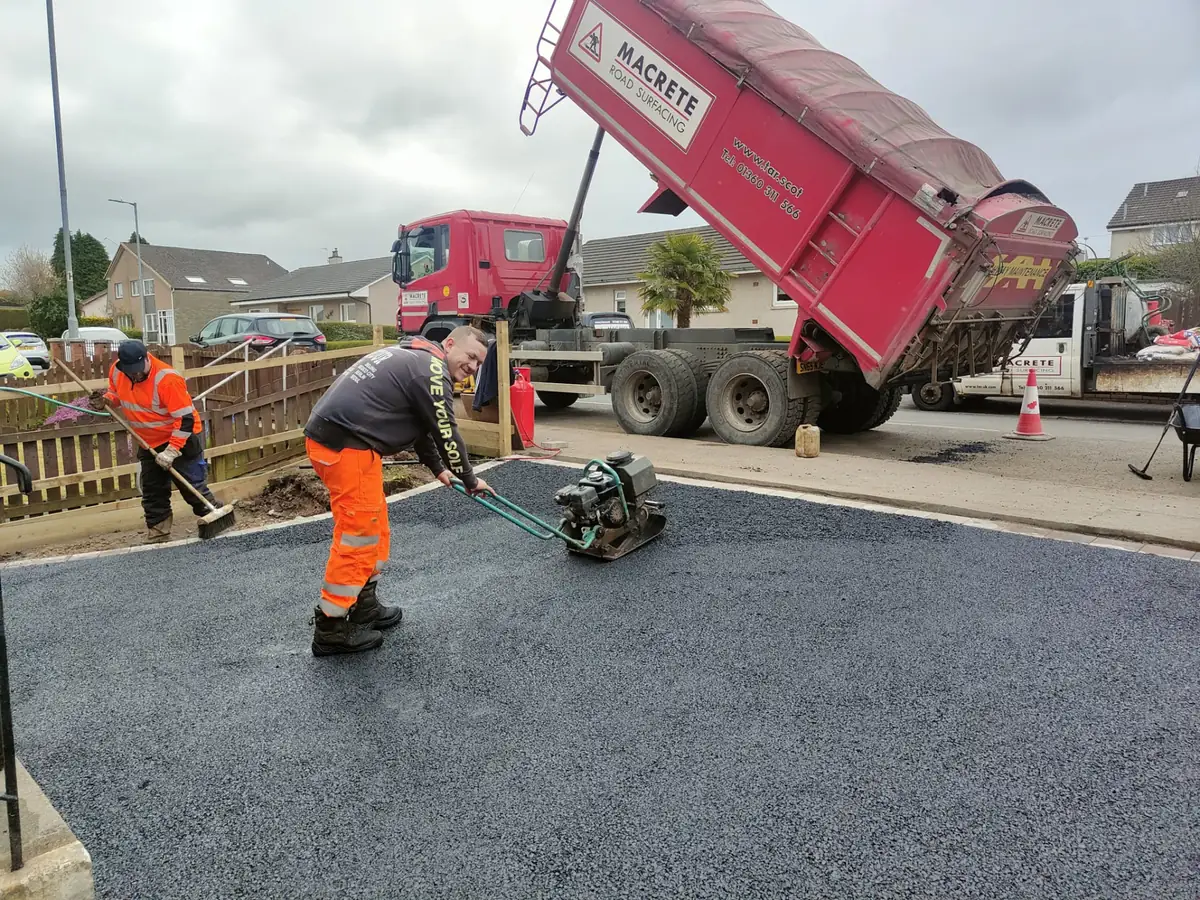
How permeable tarmac is built
The reservoir of clean stone is the part that does the work. A contractor who quotes permeable tarmac at standard-driveway depth is quoting a surface that will flood the first time it rains hard.
- 01Excavate deeper than a standard drive — usually 350–450 mm depending on ground conditions.
- 02Line the formation with a geotextile membrane.
- 03Fill with clean, open-graded stone that holds water in the voids between the pieces.
- 04Lay a binder course, then an open-graded porous wearing course.
- 05Add an overflow outlet where the sub-soil drains slowly.
Surface water rules in Scotland
Run-off from a private driveway should not discharge onto the public road, and adding a large impermeable area to a frontage can require approval. A permeable surface keeps the water within your own ground, which is the cleanest way to satisfy that.
- Permeable tarmac or porous asphalt — water drains through, no outlet needed in most soils.
- Soakaway — a buried stone or crate reservoir fed by channels; suits clay-free ground.
- Linear channel to a lawn or border — the cheapest retrofit for an existing drive.
- Draining onto the pavement — not acceptable, and the reason many drives get flagged.
Permeable vs standard tarmac in Glasgow
The extra cost is front-loaded. Where a standard drive would need a soakaway and channel drainage anyway, the gap between the two options narrows considerably.
| Standard tarmac | Permeable tarmac | |
|---|---|---|
| Guide rate per m² | £45 – £70 | £60 – £90 |
| Excavation depth | 200 – 250 mm | 350 – 450 mm |
| Surface water | Needs falls and drainage | Drains in place |
| Winter ice on the drive | Common where water sits | Much reduced |
| Maintenance | Occasional edge repair | Brush down twice a year |
When we recommend it — and when we don't
Good candidates
Frontages that fall toward the street, drives with no lawn or border to drain into, larger parking areas, and any new drive being created where a soakaway would be needed regardless.
Poor candidates
Heavy clay ground with nowhere for the reservoir to discharge, drives directly beneath mature trees that shed constantly, and sites where the excavation depth would undermine a wall or foundation. In those cases a standard drive with engineered drainage is the better answer, and we will say so.
Frequently asked questions
Related services & projects
Explore the driveway, tarmac and groundworks services behind this guide, and see the finished work we have completed for homes and businesses across Scotland.

Get your free, no-obligation quote
Free site survey anywhere in Scotland, a proper measure-up and a fixed written price — usually back with you within 48 hours.
Hamilton based · Covering all of Scotland
Not sure which drainage option you need?
We check levels, ground conditions and where the water currently goes during a free Glasgow survey, then quote the option that actually solves it — permeable, soakaway or channel.